Writing · Personal essay · 06 May 2026
Cupresso & Maisara
A personal essay about friendship, Gaza, and the small rituals that become an archive - centered on Dr Maisara Alrayyes.
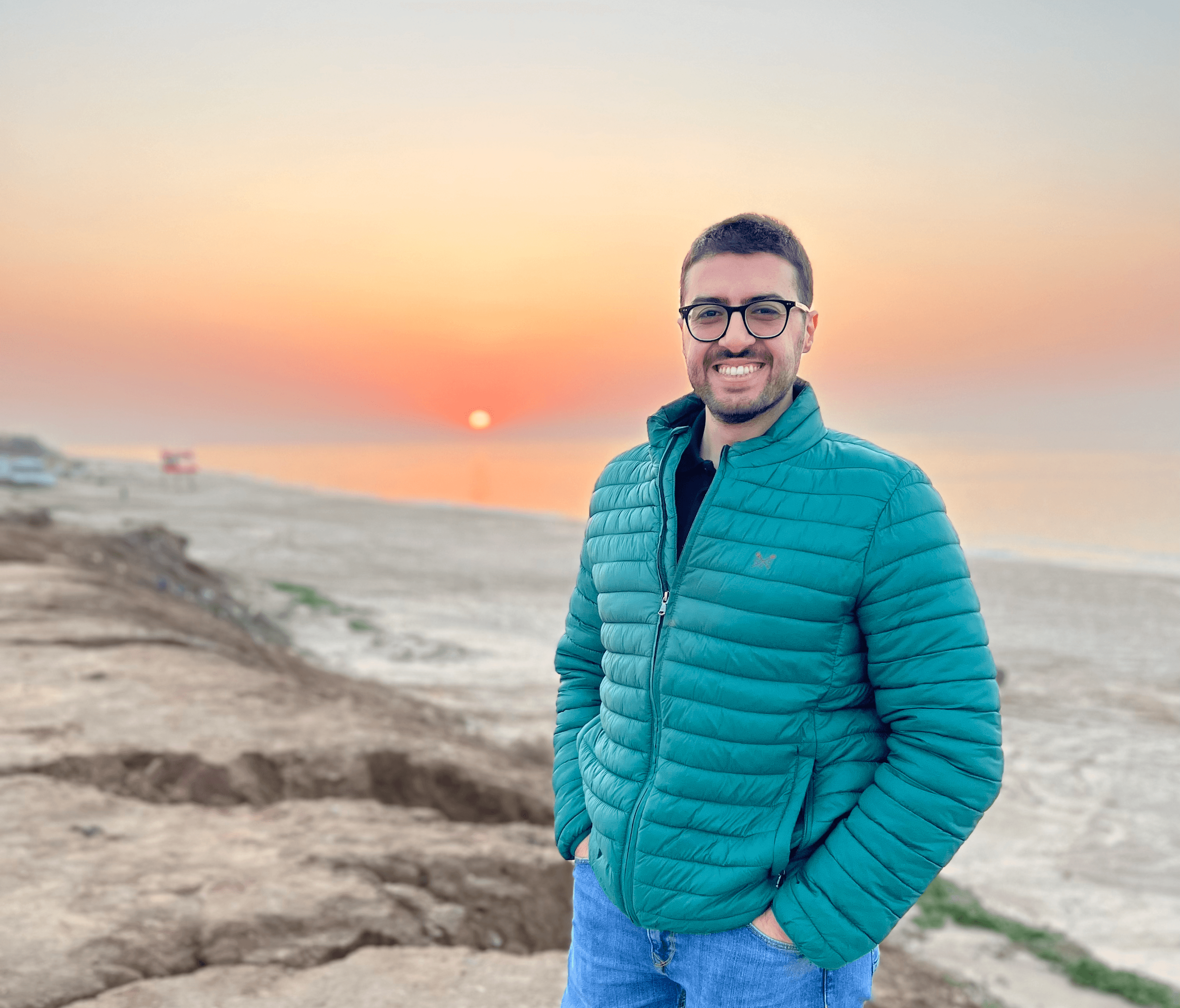
There are places that become people.
Not because they're big. Not because they're famous. But because you repeated them enough times with someone you loved, and the repetition did what repetition always does: it turned into a home.
For me, that place is Cupresso.
And for me, the person is Maisara.
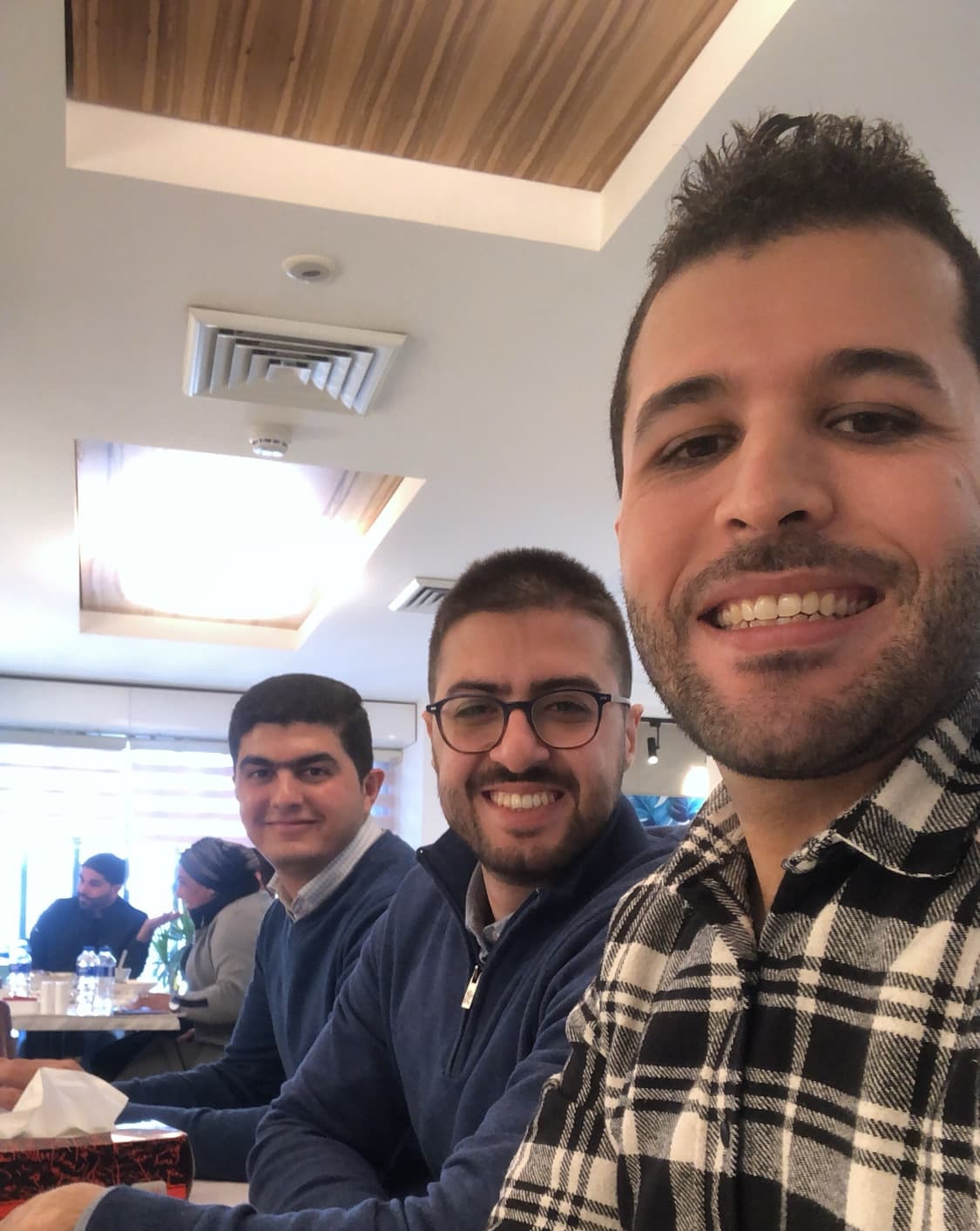
If you scroll through our chats you'll see how it keeps returning, almost like a reflex. A plan. A question. A small promise that life is still intact enough to hold a coffee and a conversation.
Cupresso wasn't just "a cafe near us." It was geography that made friendship easy. It sat in the centre of Rimal, close to our homes, close to work, close to transport - close enough that the distance between "we should meet" and "I'm here" was never a big negotiation. It became our place because it was practical, and then it became our place because it was ours.
Our small crew made it a habit - me, Maisara, Bahzad, Anas, and Amro. Sometimes it was just two of us. Sometimes it was all of us. But it always carried the same feeling: Gaza was ours, and we were still allowed to be young inside it.
In London, we were only beginning to learn coffee properly - the names, the tastes, the small differences you start to care about once you realise you've been drinking the same thing your whole life and calling it "coffee." We'd talk about it like beginners who are excited to be beginners: what's good, what's overrated, what we can actually taste versus what we're pretending to taste.
Then we came back to Gaza, and Cupresso was just opening.
We tried it once. Then twice. Then it started to become ridiculous: drinks with flavours we genuinely didn't expect to find at that level - sometimes better than what we'd had in London, and close enough that it felt like a private joke between us. Like Gaza was quietly saying, "You thought good things only lived elsewhere?"
And because it was so near, it became a ritual.
Not a dramatic ritual. Not a "life-changing" one. The best kind: the kind that makes ordinary days survivable.
When I say I miss Maisara, I don't only mean I miss a person. I mean I miss the ease of a message that begins with one word and contains a whole friendship inside it: اخوي.
We used it the way people use "hello," but it never meant only hello. It was an entrance. A tone. A shared history. It was how we opened the door between us, again and again, without needing to explain the house.
اخوي, are you free tonight?
اخوي, are we meeting or not?
اخوي, Cupresso?
Even now, writing it, I can feel how it used to land - light, automatic, affectionate - the kind of word you don't think about until you live long enough to miss it.
A day that proves what Gaza meant to us
In November 2022, we did something that felt simple and ended up feeling like treasure.
We went east - what we used to call the old city of Gaza - with friends on a weekend day that somehow stretched into its full beauty.
The morning started with a Palestinian breakfast at Akkila, right in the centre of Souq al-Zawiya. Not a "brunch." A real breakfast: the kind that fills you and slows you down and makes you talk with your hands. The kind you leave with the taste still on you.
After that we bought authentic Palestinian Nammoura from Abu Omar Saqallah, and then we walked. And walked.
The walk is what stays with me.
Those streets weren't "a nice area." They were history you could touch. Streets that felt older than any version of us. Buildings leaning into each other like they had been holding each other up for centuries. The spirit of the place - the density, the life, the stubborn continuity - and the presence of very old mosques and churches - made you understand Gaza as something more than headlines.
That day didn't feel like an escape from Gaza.
It felt like Gaza, fully.
By the time we ended up back at Cupresso for coffee, it was already late enough for the day to start softening. We were tired in the good way - the way you get tired when you've actually lived a day instead of only surviving it.
And then, by the end, we were at the Gaza sea port.
I remember thinking, quietly: nothing beats the beauty of Gaza.
Not because it was perfect.
Because it was ours.
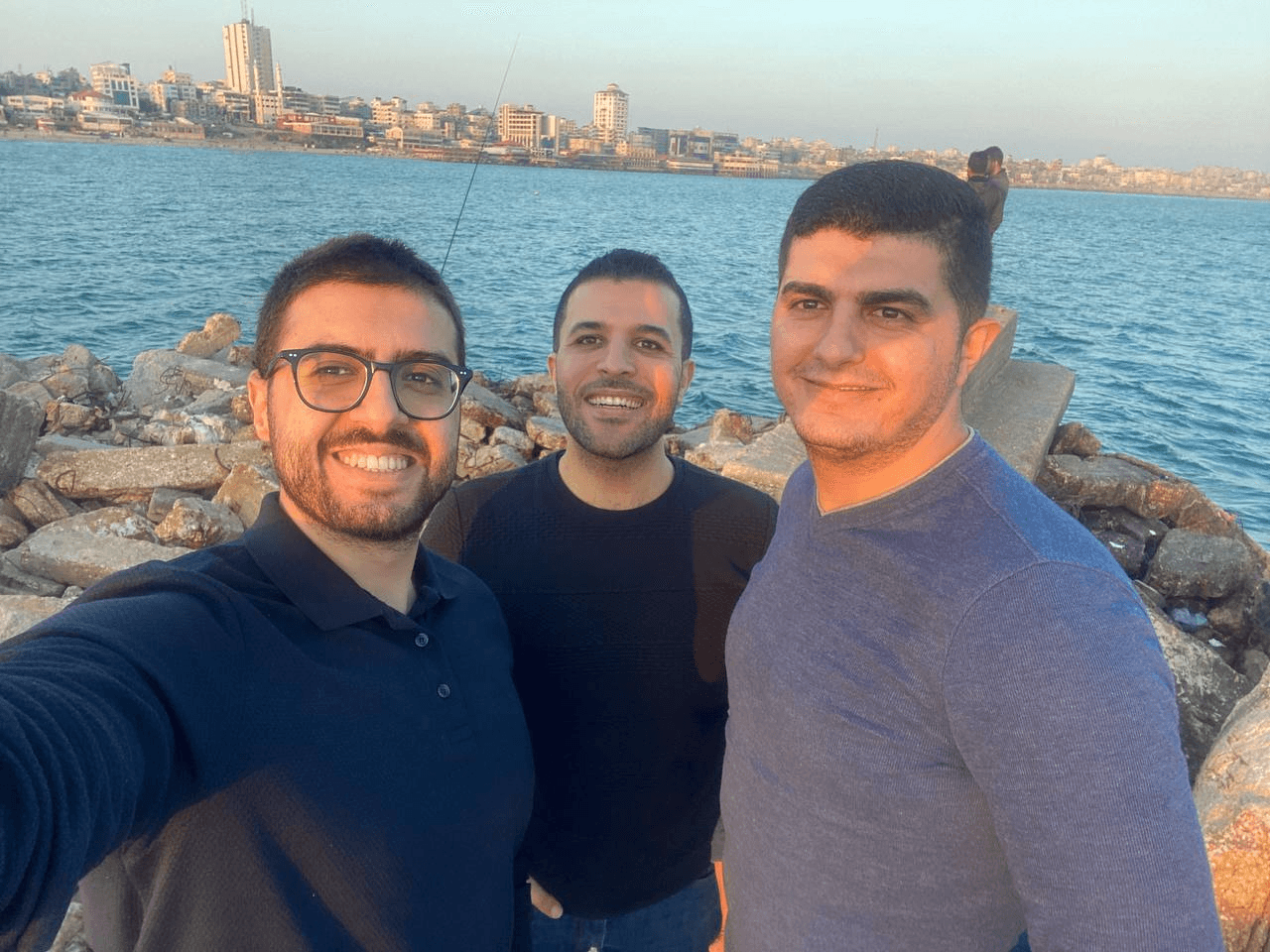
That's the thing I want people to understand about Maisara, and about our friendship: we weren't only attached to Gaza through pain. We were attached through routine and taste and streets and jokes and coffee and plans that were so normal they didn't feel like blessings until they were taken.
Marriage, at the same time
Before everything broke, we were building our lives in parallel.
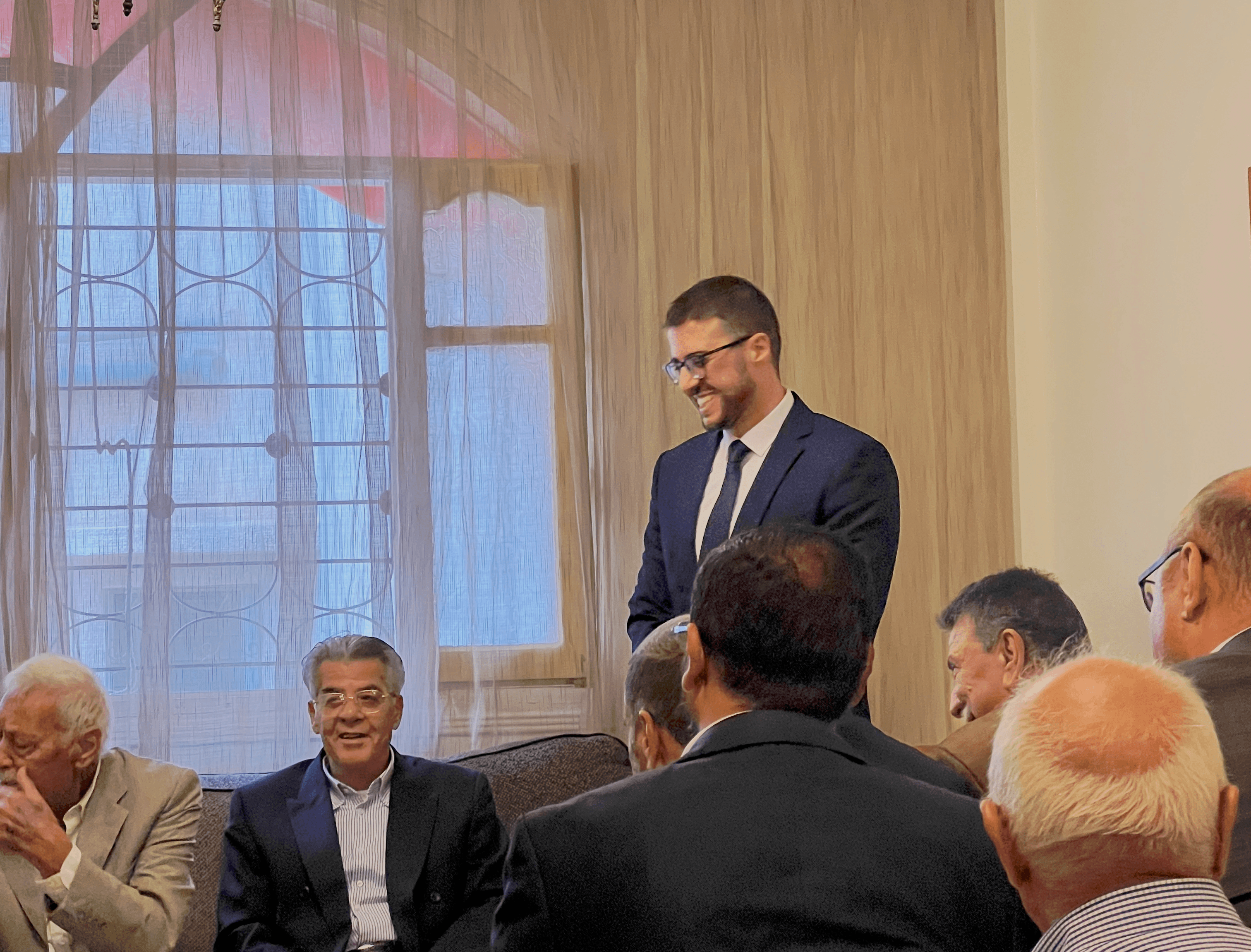
Maisara got engaged and married to Laura - our Chevening friend. She knew him up close, in the unglamorous daily way that reveals who someone really is. Around the same time, I got married too.
Those months were not a footnote. They were a whole season of shared experience: shopping lists that never ended, decisions that felt absurdly important (curtains, appliances, tiny home details), running around for bookings and arrangements, the quiet pressure of trying to begin something beautiful while Gaza kept being Gaza.
We spent a lot of time in that in-between: not boys anymore, not fully settled men yet - just friends learning what it means to build a home, and to be responsible to another person.
And because we were doing it at the same time, we didn't have to translate the stress. We could laugh at it, complain about it, and keep moving. The friendship didn't pause for marriage. It deepened.
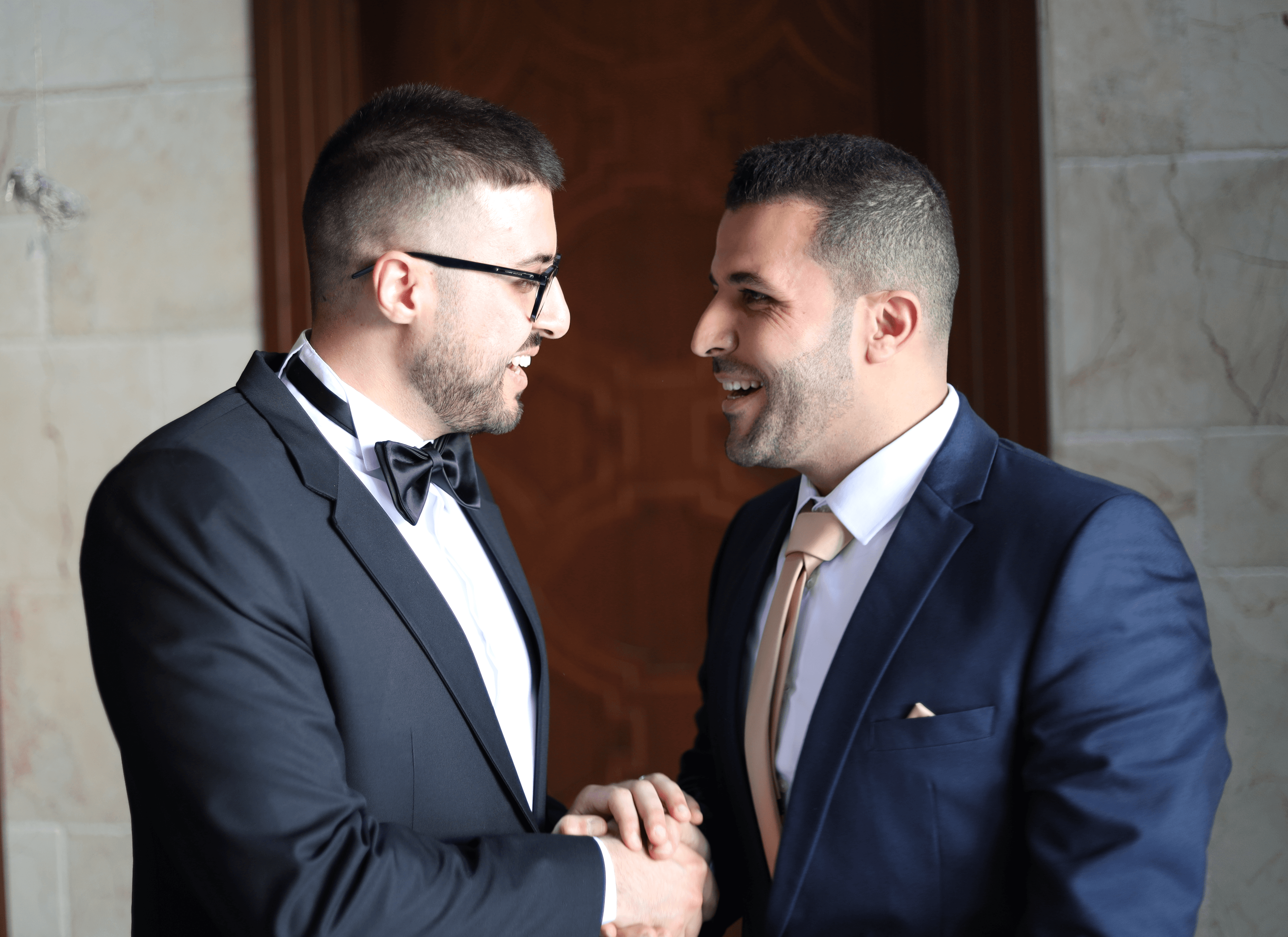
The gym - exercise as routine
We also had our other ritual: the gym.
We trained at two gyms in central Gaza - Technogym and Oxygen Gym. It wasn't just exercise. It was routine. It was a place where you could feel your body obey you for an hour, when so much else in Gaza didn't. We shared that space the way friends share any good habit: pushing each other, teasing each other, showing up even when we didn't feel like it, then leaving with the small dignity of having done something normal.
Outings that made Gaza feel wide
It wasn't only Cupresso. It was the outings too - with our small group and with other friends: chalets, day trips, rides west, and the kind of afternoons that ended with the sea and a long exhale.
We'd go to Khan Younis sometimes - to تلة العشاق - a hill by the sea, around the unfinished port. We'd bring things with us and sit for hours, letting the air do its work, letting the day slow down until it felt like rest.
That's what I mean when I say Gaza was ours. Not ownership - belonging. The kind that lives in shared jokes, shared places, shared weekends.
When the messages changed shape
When war arrived, it didn't only break buildings. It broke the rhythm that held us together.
Even then, the chat language still tried to reach for the old life: plans, check-ins, small jokes. But the sentences got shorter. The gaps between replies got heavier. The world started charging a price for each normal thing.
And still, we kept speaking to each other the same way.
اخوي.
That word kept showing up, stubbornly, like a heartbeat you refuse to lose.
In October 2023, I wrote to him in the early hours of the morning: we were getting cooked, fire belts, the kind of night that leaves your body buzzing even after it ends. He replied at five in the morning with two words that didn't need decoration. They landed exactly because they were plain:
We're shattered, اخوي.
The sentence he wrote before it happened
There is a message of his I can't shake, because it reads like a fear turning into prophecy.
In the group chat, he said his fear had risen in the last few days - that he kept imagining himself under the rubble, and that he was afraid of surviving there.
It's hard to explain what that does to you, as a friend: to realise he had already pictured the shape of his own death, and still kept living his days anyway - still holding on to the idea of ordinary life, still trying to be himself inside the impossible.
How I learned he was gone
The day Maisara was killed, there wasn't a single clean moment when life switched from "he's alive" to "he's not."
The morning begins with an ordinary check-in in our group chat. He replies that he's still okay. The kind of message that is supposed to hold for a few hours, at least. The kind of message that is supposed to keep your worry from climbing too high.
Then, later, the group chat turns into a waiting room.
Someone calls someone. Someone is crying. A message comes through: he's under the rubble.
And for a while you live inside that terrible in-between - the part where your mind keeps negotiating with possibility because certainty is too brutal to hold.
Days later, the messages harden. The kind of confirmation you never want, delivered in fragments: through people, through phones, through partial updates that you keep rereading because you don't know what else to do with your hands.
He was killed alongside most of his family members. And then, two days later, grief kept moving: his brothers, Moayad and Mohammed, were killed while trying to find their family under the rubble - reunited, I hope, in heaven.
It didn't feel like a door closing.
It felt like air leaving the room.
What Cupresso becomes after him
If you have never lost someone like this, you might think grief is only sadness.
It isn't.
Grief is geography. It's the way a place changes shape when the person is gone.
Cupresso still exists as a real cafe in Gaza. The drinks are still good. The location is still central. People still walk in, still order, still live.
But for me, Cupresso has become an archive.
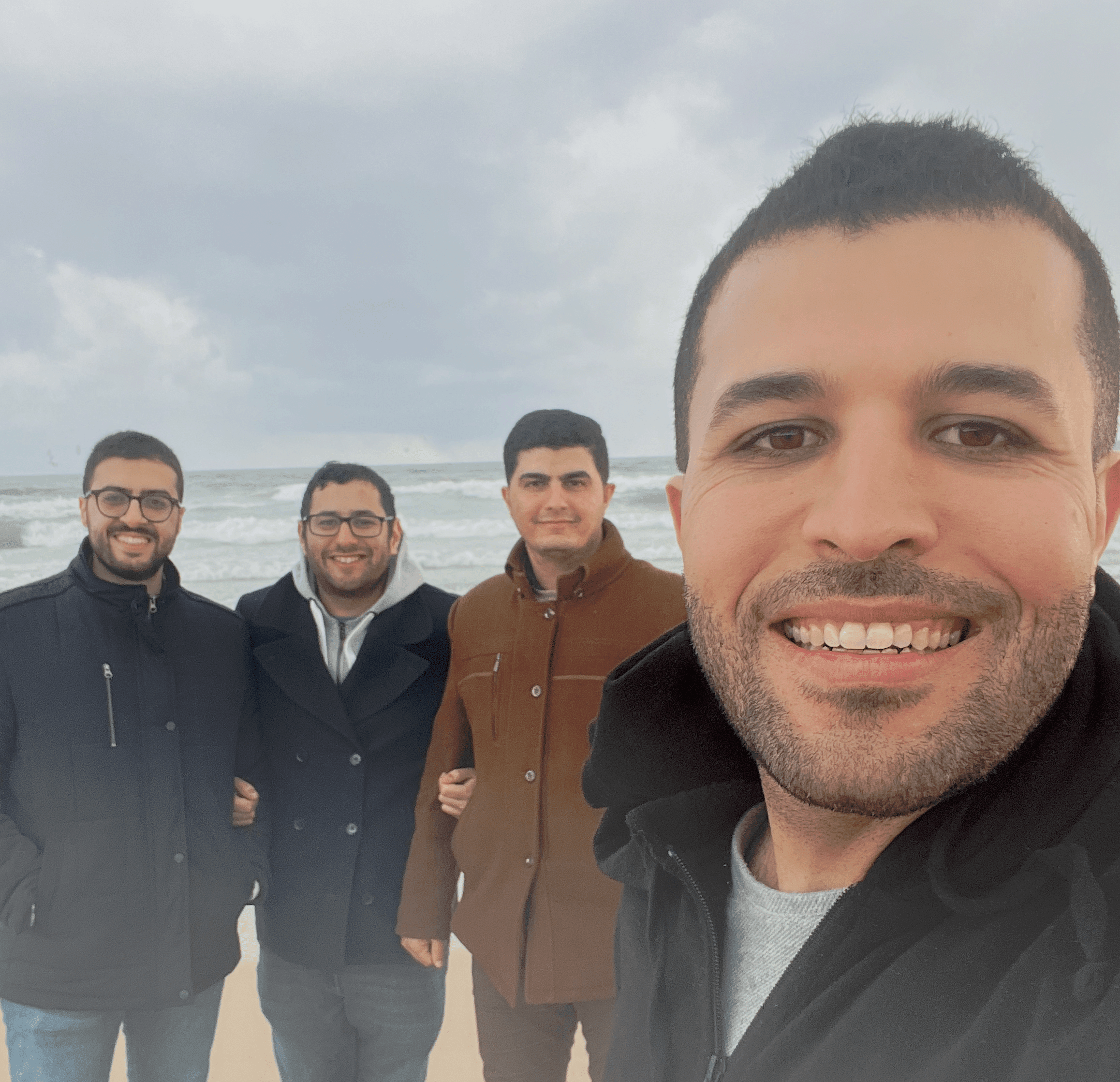
Because that's what makes people grieve him properly: not only the fact that he was taken - but the fact that he had a life worth repeating.
And we were repeating it.
May he rest in Jannah.
Reader notes